
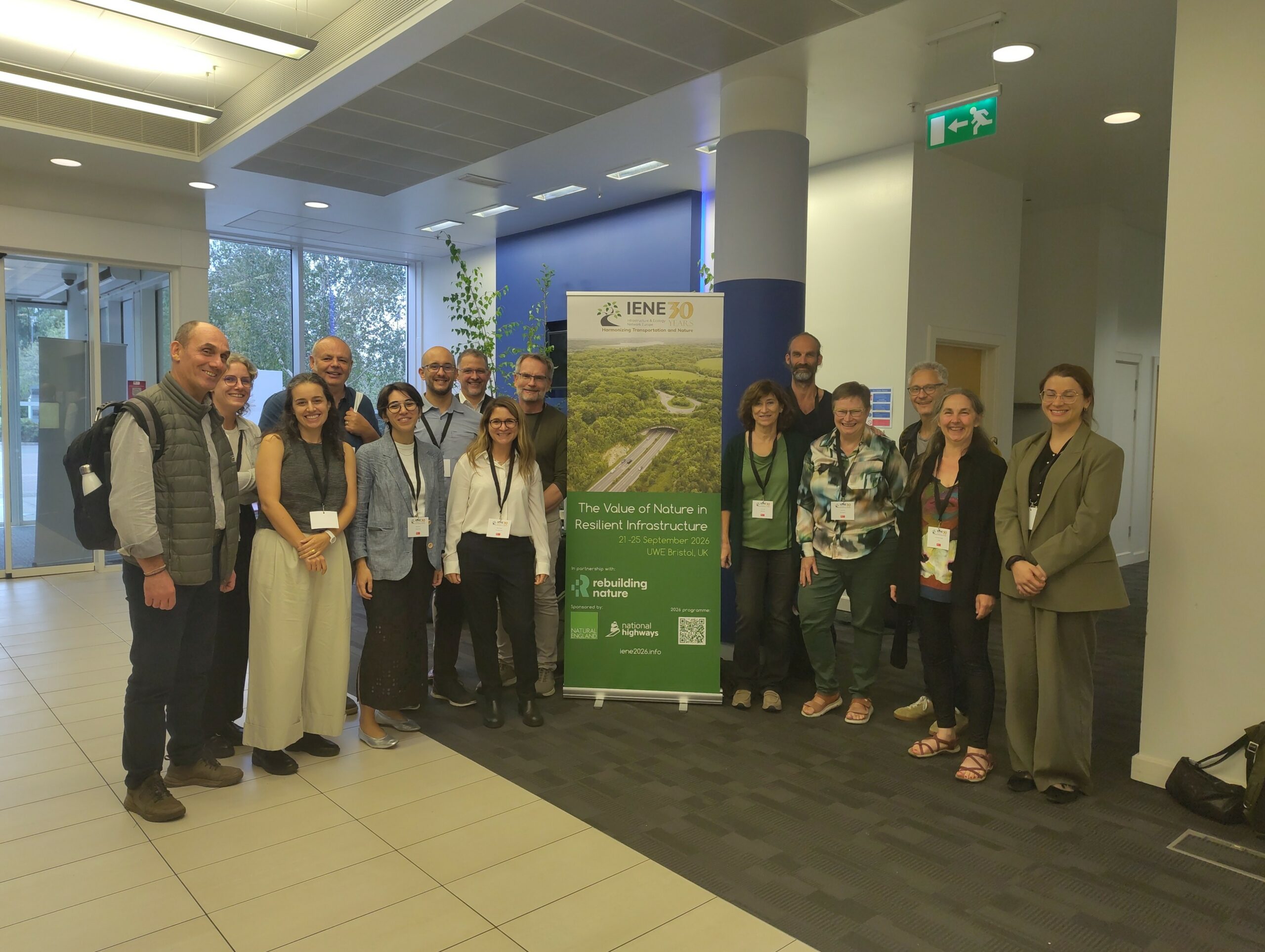
From 21 to 25 September 2026, the IENE 2026 International Conference brought together more than 300 participants in Bristol to discuss how transport infrastructure and ecology can work together. The SYMBIOSIS project, supported by the Europe’s Rail Joint Undertaking and its members, was strongly present throughout the week, with an interactive workshop and five further contributions presenting its work on integrating biodiversity into the lifecycle of linear infrastructure.
Following the infrastructure lifecycle
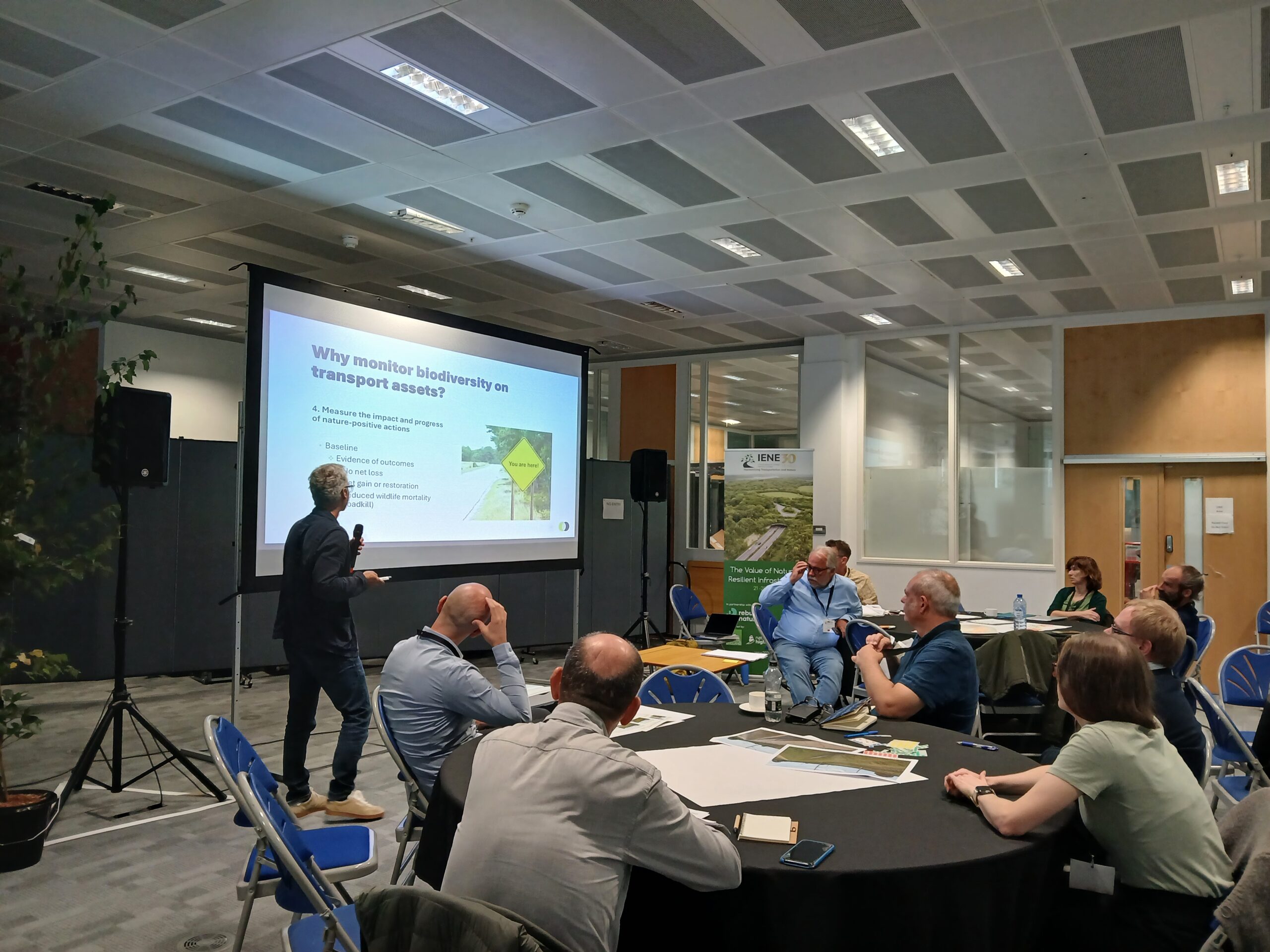 On 22 September, SYMBIOSIS partners ICSI, Minuartia, UKCEH and CERTH led the workshop “Integrating Biodiversity into Climate-Resilient Infrastructure: Insights from the SYMBIOSIS Project” at UWE Bristol. The session combined short presentations and practical group exercises around three themes: identifying priority areas for nature-based solutions, biodiversity monitoring and data integration, and governance and decision-making. Across all discussion groups, the criteria developed under Task 3.2 to identify priority areas for nature-based solutions were rated “Important” or “Very important”, confirming the project’s methodological approach. Climate risk emerged as the most important criterion, reflecting Nature-based solutions (NbS)‘s core role as a solution to a specific problem or challenge, while participants also flagged land access and ownership, multi-stakeholder coordination, and the need for stronger cost-benefit analyses as factors worth considering further.
The economic case for nature
The same morning, Carlo Prislei (FS Engineering) presented, in Session C1 on Making the Economic Case for Nature, the economic evaluation of ecosystem services across the lifecycle of sustainable railway infrastructures, drawing on the research carried out within Task 5.4 of the project.
Assessing cumulative impacts of paired infrastructure
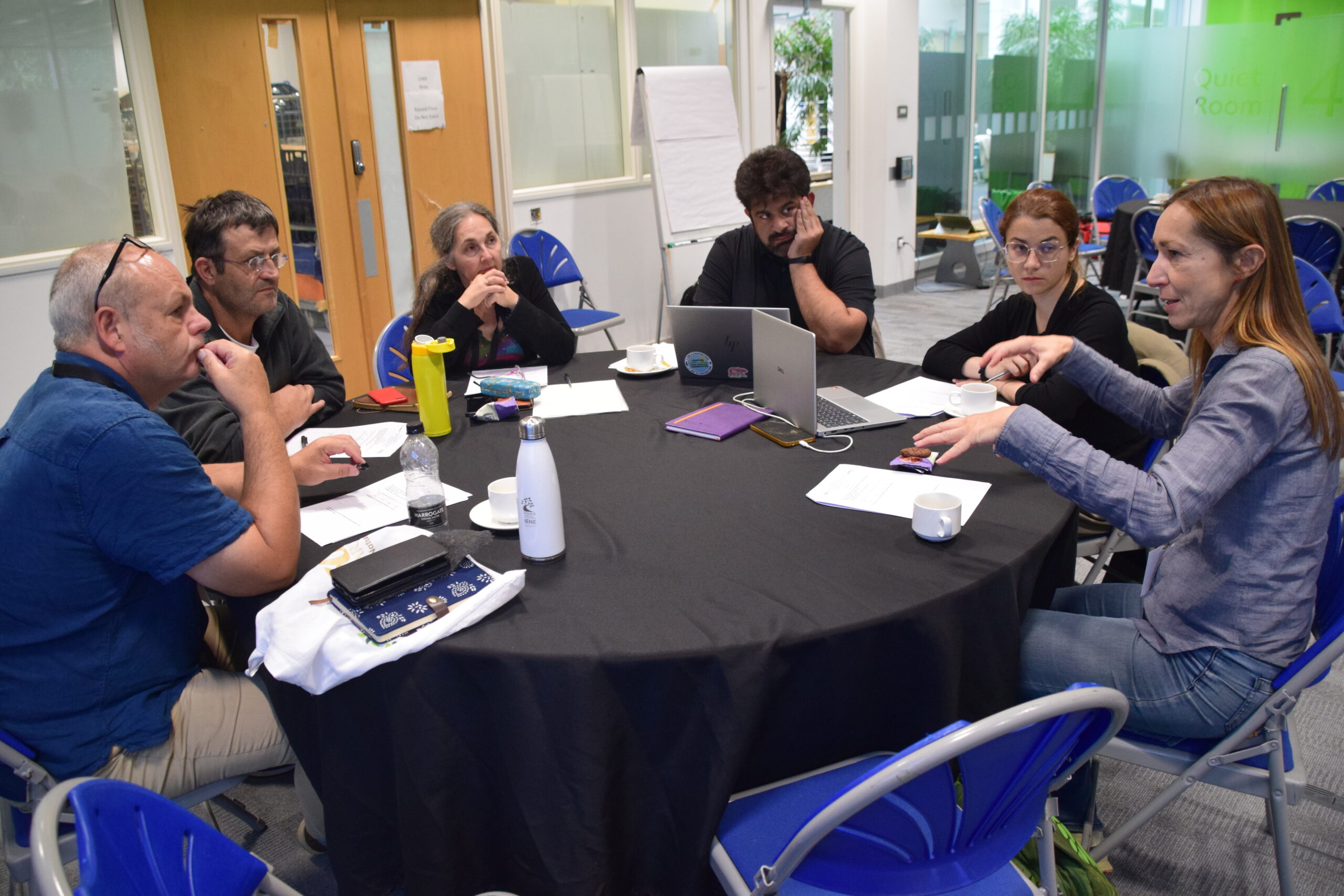
Later that day, the workshop “Cumulative Impact Assessment in Pairing Transport Infrastructure”, chaired by Lazaros Georgiadis (CERTH), addressed a growing technical challenge: assessing the ecological impact of several infrastructure corridors running side by side. After a presentation of the project’s emerging assessment framework and an open discussion, participants split into small working groups to identify challenges on pairing or bundling linear transport infrastructure and propose practical solutions for specific combinations, such as road-railway or road-powerline corridors, in three scenarios on different distances between their alignments (Close bundling/shared transport corridor, Intermediate separation and Separate transport corridors / maximum separation). Their input will feed directly into a forthcoming SYMBIOSIS deliverable, highlighting the need to change from the one linear project approach on impact assessment, avoidance and mitigation to a wider perspective of a network of linear infrastructures in a dedicated landscape. Also, the results of the workshop concluded the need for an overall assessment of the complexity of each case depending on basic factors as the landscape, the species and their ecology and the cohesion of the habitats for each focused area,
Upscaling nature-based solutions in railway networks
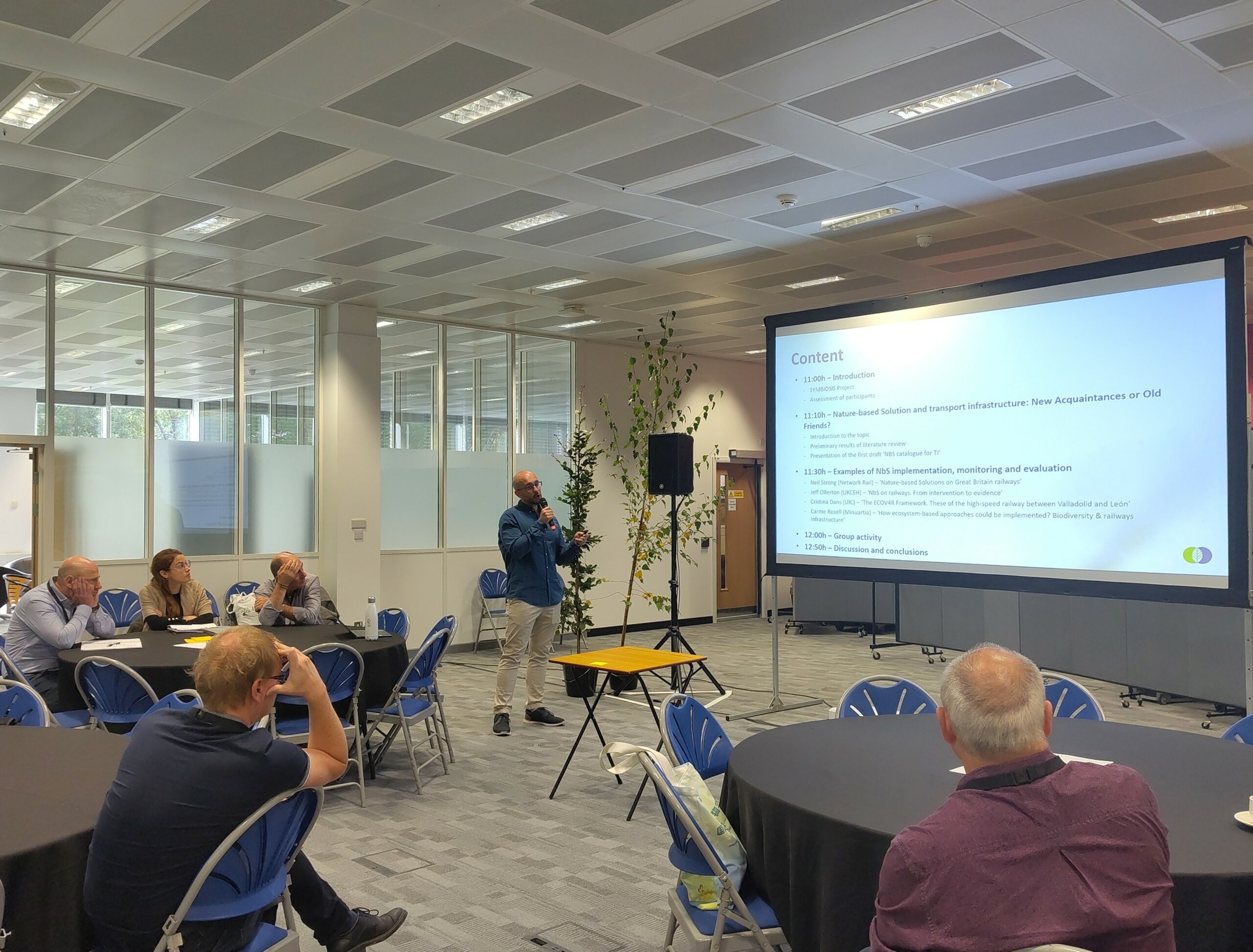
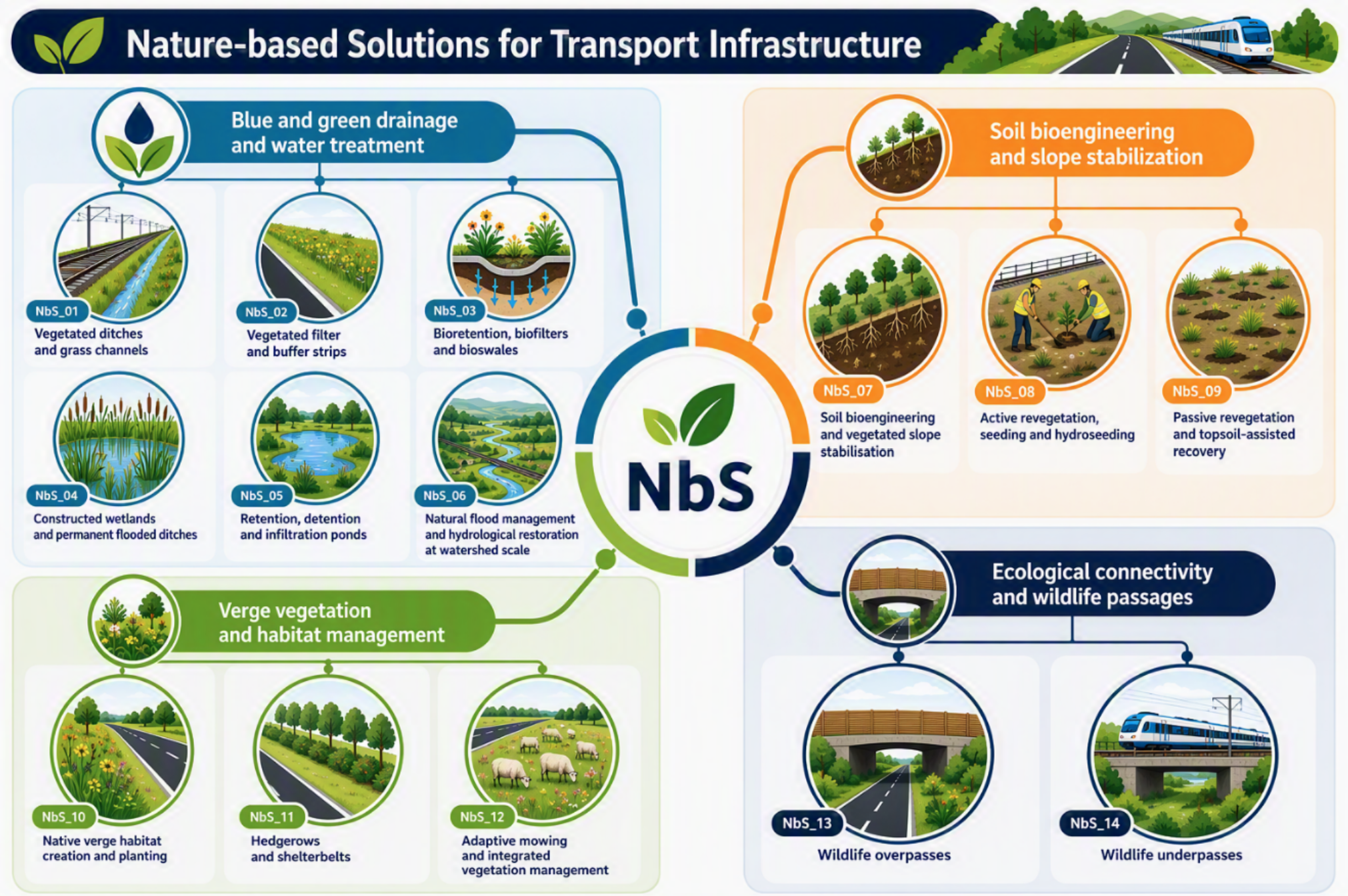
On 24 September, the workshop “From Grey to Blue and Green Infrastructure: Upscaling Nature-based Solutions (NbS) in Railway Networks”, led by Luis M. Fernández (Minuartia), presented a catalogue of nature-based solutions suitable for railway rights-of-way, developed through the project’s assessment of ecological asset design and management across European railways. Case studies were followed by a facilitated discussion on the feasibility, costs and benefits of each solution, and on how blue and green infrastructure can strengthen railway resilience against flooding and extreme heat while enhancing biodiversity. Feedback on the session was highly positive: participants endorsed the structure and content of the catalogue, and provided useful input to refine the terminology used. Discussions also highlighted the need to develop common standards across the sector, and the importance of identifying the primary engineering goal of each intervention, such as which climate-related hazard it targets, while also considering the habitats and species present on site. The outcomes will inform future decision-making guidelines.
Monitoring, valuing and reporting on biodiversity
The same morning, Reto Schmucki (UKCEH) presented, in Session B3 on Monitoring, Mapping & Predicting Wildlife Risk, the paper “Operationalising biodiversity monitoring on railway networks through passive acoustics, earth observation and integrated data workflows”, developed with co-authors from across the SYMBIOSIS partnership and beyond.
Mainstreaming biodiversity in corporate sustainability reporting
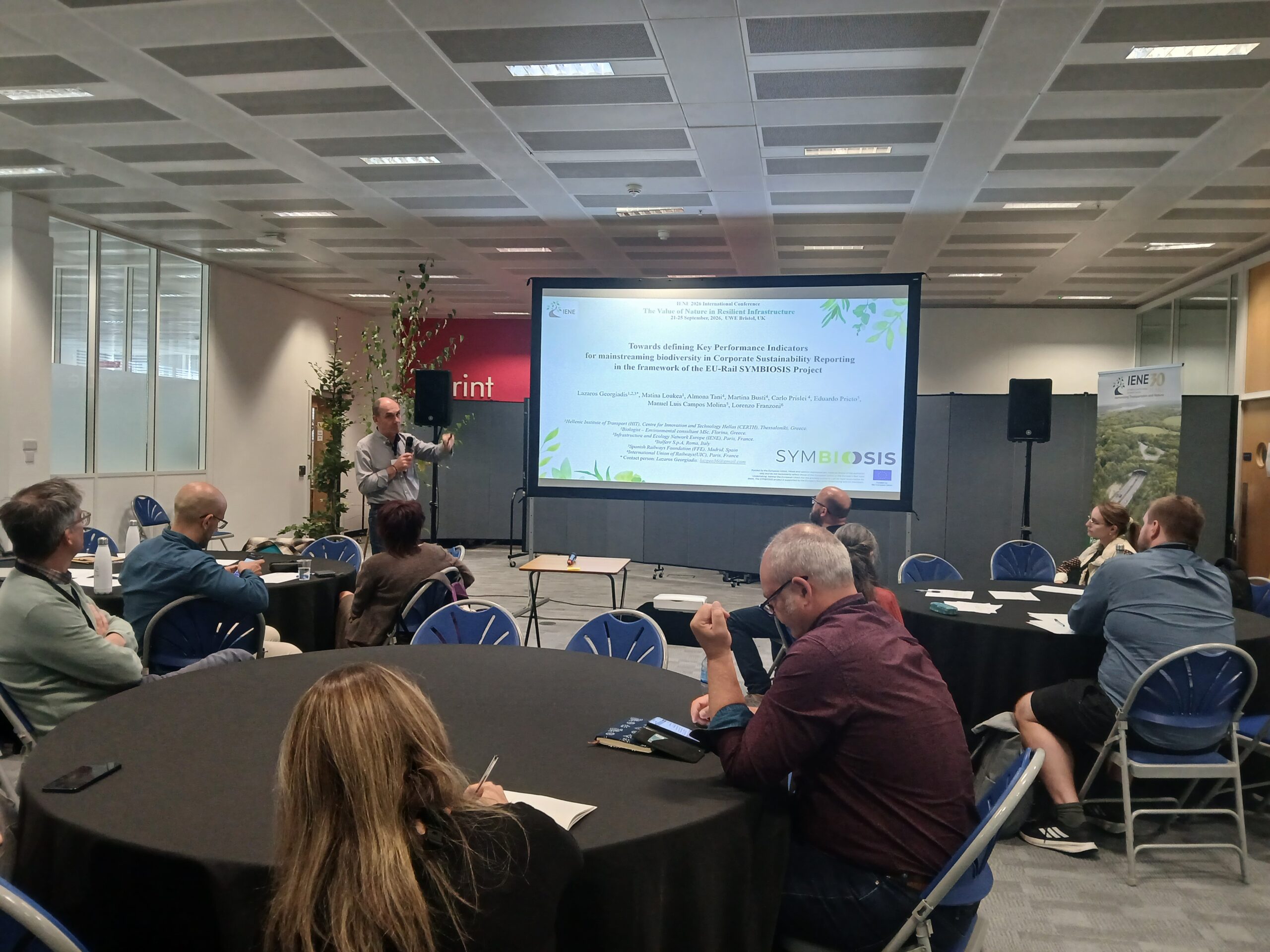
The week closed for SYMBIOSIS with the workshop “Towards Defining Key Performance Indicators for Mainstreaming Biodiversity in Corporate Sustainability Reporting”, led by Lazaros Georgiadis (CERTH) and the project team. It opened with a presentation of the project’s research on biodiversity and Corporate Social Responsibility reporting, based on a literature review and a cross-sector stakeholder questionnaire, followed by a discussion across four challenge areas: policy alignment, measurement and data standardisation, risk management, and communication and collaboration. Participants then worked in four teams to define and score, or to propose new practical biodiversity KPIs for corporate and national sustainability reporting, including alignment with the Kunming-Montreal Global Biodiversity Framework.
Looking ahead
Together, these contributions covered the breadth of SYMBIOSIS’s work, and the exchanges in Bristol provided valuable input from the wider transport ecology community, which will feed directly into the project’s next deliverables, from the cumulative impact assessment framework to the biodiversity KPIs for corporate sustainability reporting.
The recordings of the presentations will be made available in the coming days, so that those who could not join in Bristol can also follow the discussions.